The Problem Nobody Talks About
Imagine you’re sitting in traffic. Again. There’s a guy in front of you who just cut someone off. Behind you, someone didn’t see the red light change. To your left, a delivery driver is frantically checking their phone. You’re surrounded by millions of cars, all piloted by humans doing their best — but constantly distracted, tired, or just not paying attention. It’s chaos. And it’s completely normal. But here’s the thing: we’ve accepted this as inevitable. Humans drive. Humans make mistakes. Humans cause accidents. We live with it, insure against it, and mostly just hope we’re not the ones making the mistake that changes everything.
Here Comes the Solution
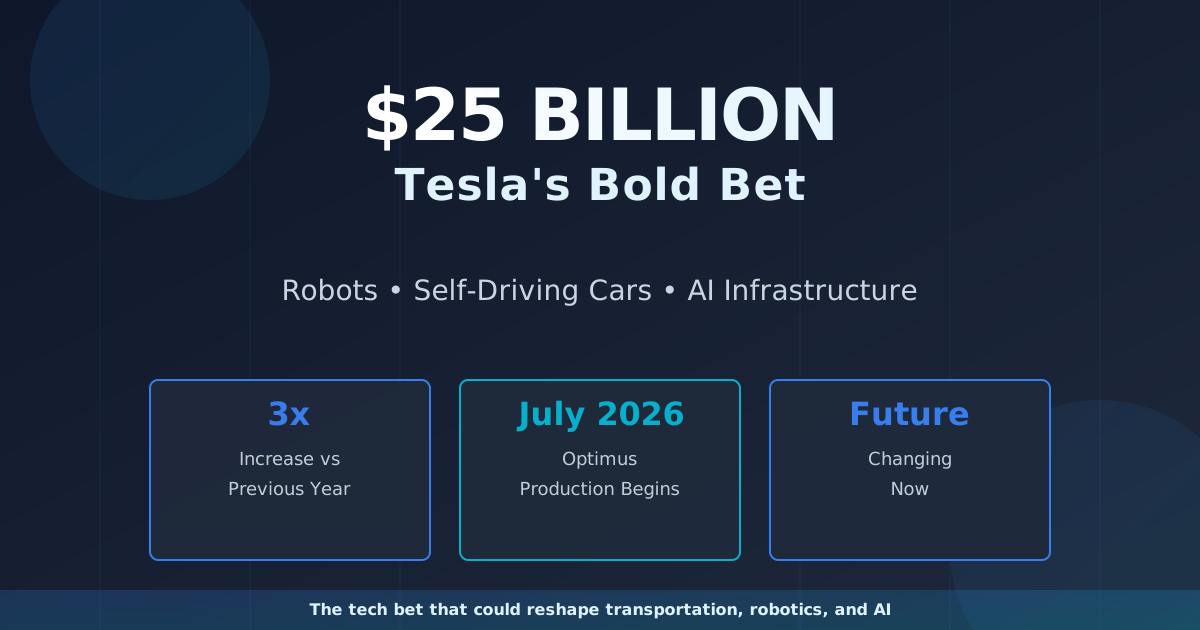
But what if I told you that in about a year, you might never have to sit in traffic with human drivers again? That’s not a fairy tale. That’s exactly what Tesla just bet $25 billion on. Picture this: It’s April 2026. Tesla just announced they’re spending nearly three times what most countries spend on their entire defense budget — $25 billion — on three things: robotaxis that drive themselves (like Uber, but with no driver), humanoid robots that could work in factories, and the computer chips to power it all.
At first glance, it sounds bonkers, right? But here’s where it gets interesting. Every cent of that money is a bet that the future of transportation and work doesn’t involve humans doing the driving or the heavy lifting anymore. Tesla isn’t just tweaking cars. They’re betting the company on a complete reimagining of how we move and work.
The Secret Sauce
Think of it like this. Imagine you had a friend who could work 24/7, never got tired, never needed a bathroom break, and never got distracted. Not because they’re a robot yet, but because they will be soon. That’s what Tesla is building. Their Cybercab — that sleek, futuristic taxi with no steering wheel — is basically that friend. You call it, it comes to get you, and it never has to sit in traffic because it can talk to every other car on the road, learning from millions of journeys instantly. That’s the first big bet.
The second bet is on Optimus, their humanoid robot. Imagine a factory where instead of humans standing at assembly lines for eight hours straight, a robot does it. It learns by watching once, then repeats perfectly, forever. No complaints. No sick days. Tesla thinks this robot will be worth more than all the cars they’ve ever sold combined. That’s how confident they are.
But here’s the thing — none of this works without the third part: the chips. Tesla is building specialized computer brains for these machines. Think of it like the difference between a pocket calculator and a supercomputer. They’re not just using off-the-shelf chips; they’re creating the exact thinking engine these robots need to see, understand, and act on the world in real-time.
What This Means in Real Life
If Tesla pulls this off, the world changes. Your commute becomes a time to read, work, or just chill — not fight traffic. Factories don’t need thousands of workers; they need robots that never rest. Cities redesign themselves around autonomous vehicles instead of parking lots. Delivery becomes instant. Labor becomes optional for dangerous or repetitive work.
But it’s not just about convenience. It’s about unlocking time. How many hours do you spend driving? How much could you do if you got that back? That’s what Tesla is betting on — that reclaiming human time is worth $25 billion.
The Plot Twist: It’s Getting Real Soon
Here’s what makes this different from other “the future is coming” predictions: Tesla is giving a timeline. July 2026. That’s not someday, that’s next quarter. That’s Cybercab taxis on the road. That’s investors watching to see if a self-driving taxi actually works without a safety driver. That’s the moment where this goes from “bet” to “reality check.”
And if it works? The Optimus robots start rolling into factories. The chips prove they can handle real-world chaos. The momentum becomes unstoppable. Every other automaker scrambles to catch up. Every company with repetitive work looks at robots differently.
The Bottom Line
Tesla didn’t invent autonomous vehicles or humanoid robots or custom chips. What they did is stake their entire future on the belief that these three things converge now, not in 30 years. That’s audacious. That’s risky. That’s also kind of amazing. Because if they’re right, they’re not betting on the future — they’re building it.
And honestly? That’s worth $25 billion.
P.S. — The real question isn’t “will this work?” It’s “what happens to the world when it does?” Because in about 18 months, we might find out.